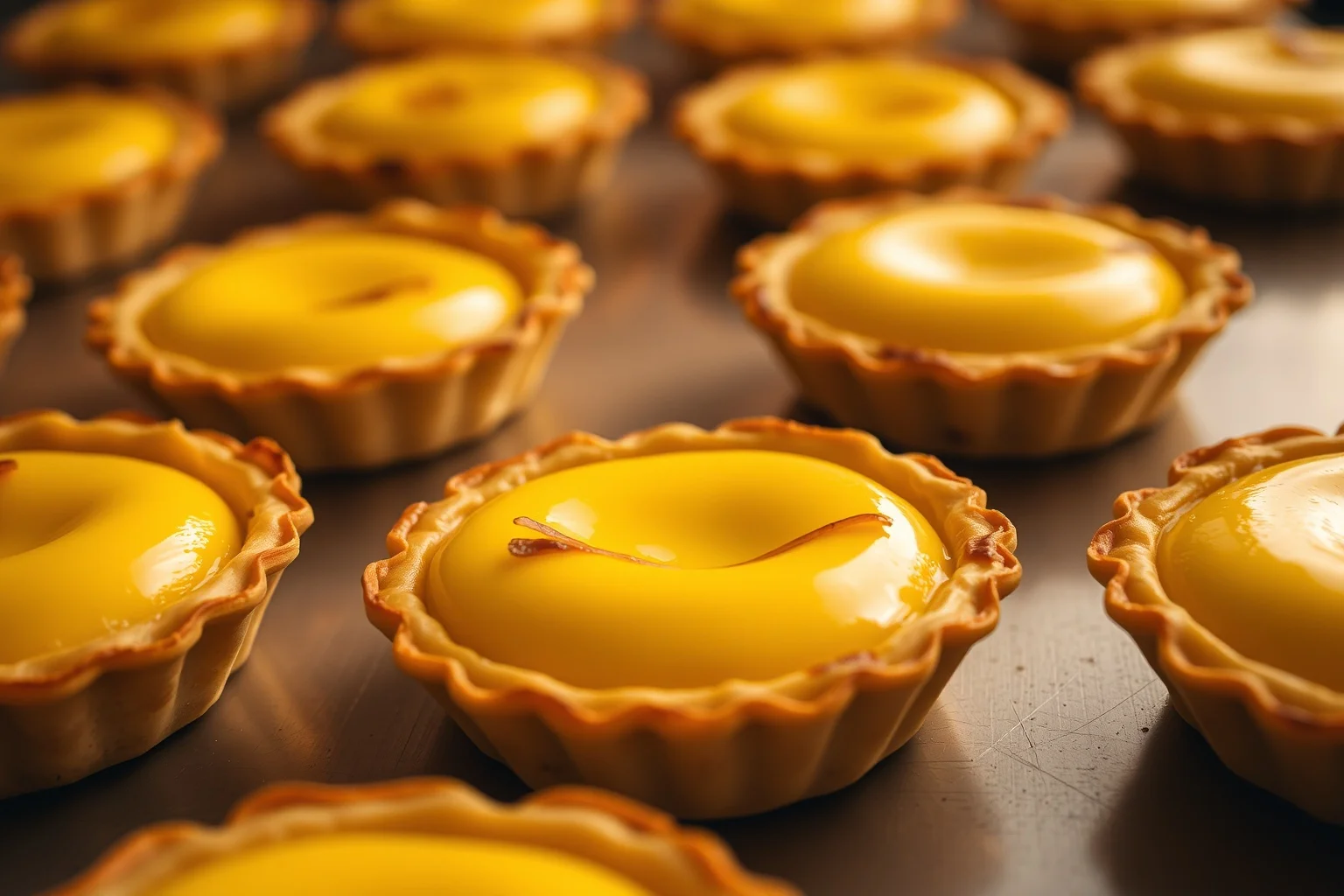
Egg Tart
A crisp, buttery shell cradling a trembling custard filling — the Hong Kong egg tart is simplicity perfected. The custard should be barely set, with a silky wobble that catches the light, its surface smooth and glossy with the faintest caramelised blush from the oven's heat.
The pastry comes in two schools: a crumbly shortcrust (sou pei) with layers that shatter into buttery flakes, or a flaky puff pastry (yau pei) with a more bread-like chew. Partisans of each camp defend their preference with a passion that borders on religious conviction.
Fresh from the oven, still warm, with the custard just barely holding its shape — that's the egg tart at its peak. It's the treat that Hong Kong bakeries are built around, the snack that makes a queue worthwhile, and proof that sometimes the simplest things are the hardest to get right.
Flavor Profile
Origin
Hong Kong, Hong Kong
The Hong Kong egg tart has dual parentage: British custard tarts from the colonial era and Portuguese pastéis de nata that arrived via Macau. Hong Kong bakers took both inspirations and created something distinctly their own — less sweet than the British version, less caramelised than the Portuguese, with a custard that's smoother and more delicate than either. The egg tart became a cornerstone of Hong Kong bakery culture and a must-have at dim sum.
Variations
Portuguese Egg Tart
The Macanese cousin with a blowtorched, caramelised top and a creamier, more intensely eggy filling.
Matcha Egg Tart
A modern variation with earthy green tea custard that adds bittersweet depth to the classic.
You might also like
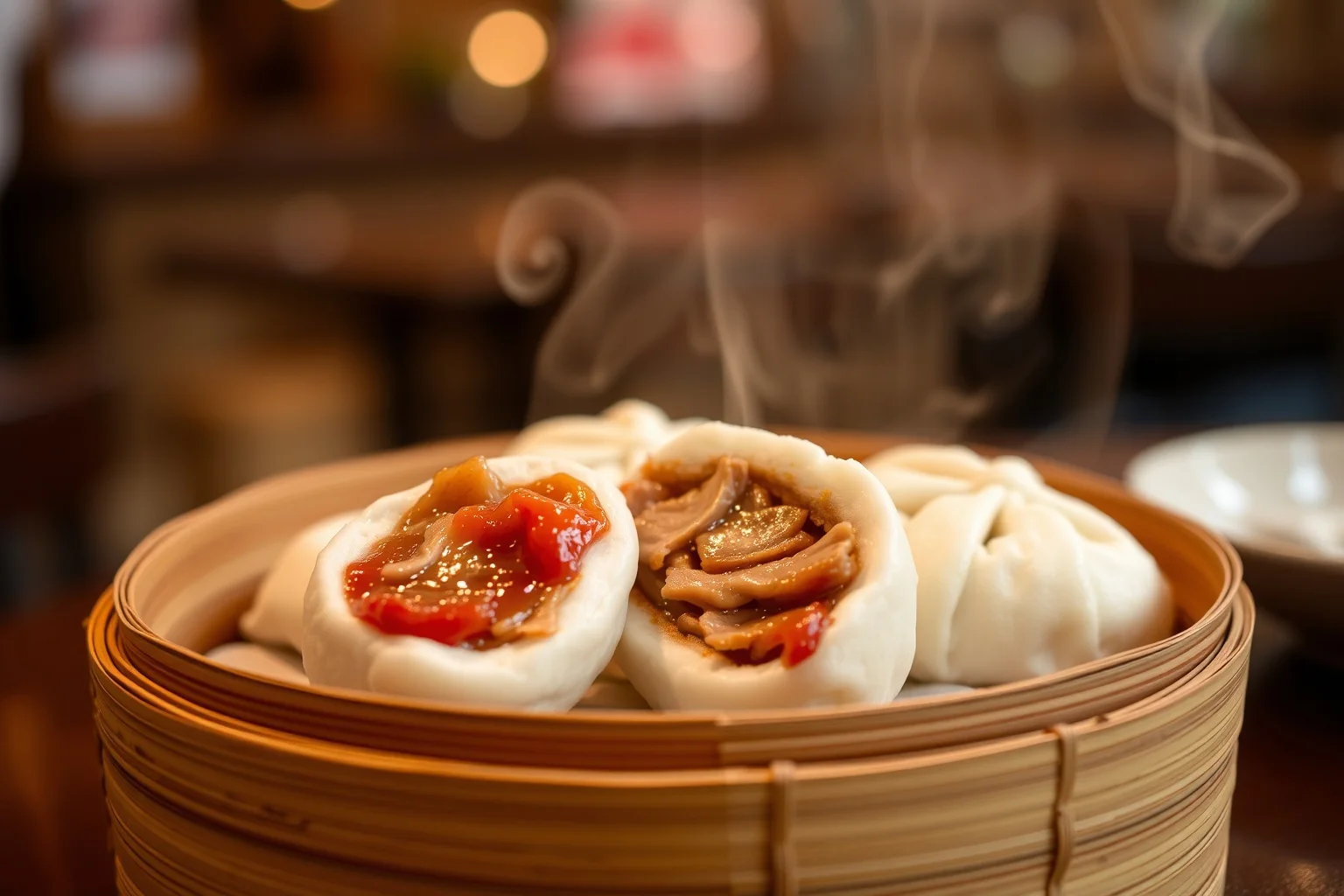
Char Siu Bao
Tear open a pillowy white steamed bun and discover a glistening pocket of sweet, smoky barbecue pork. The filling — chunks of char siu lacquered in a sticky sauce of oyster sauce, hoisin, and honey — is rich, savoury, and just sweet enough to keep you reaching for another.
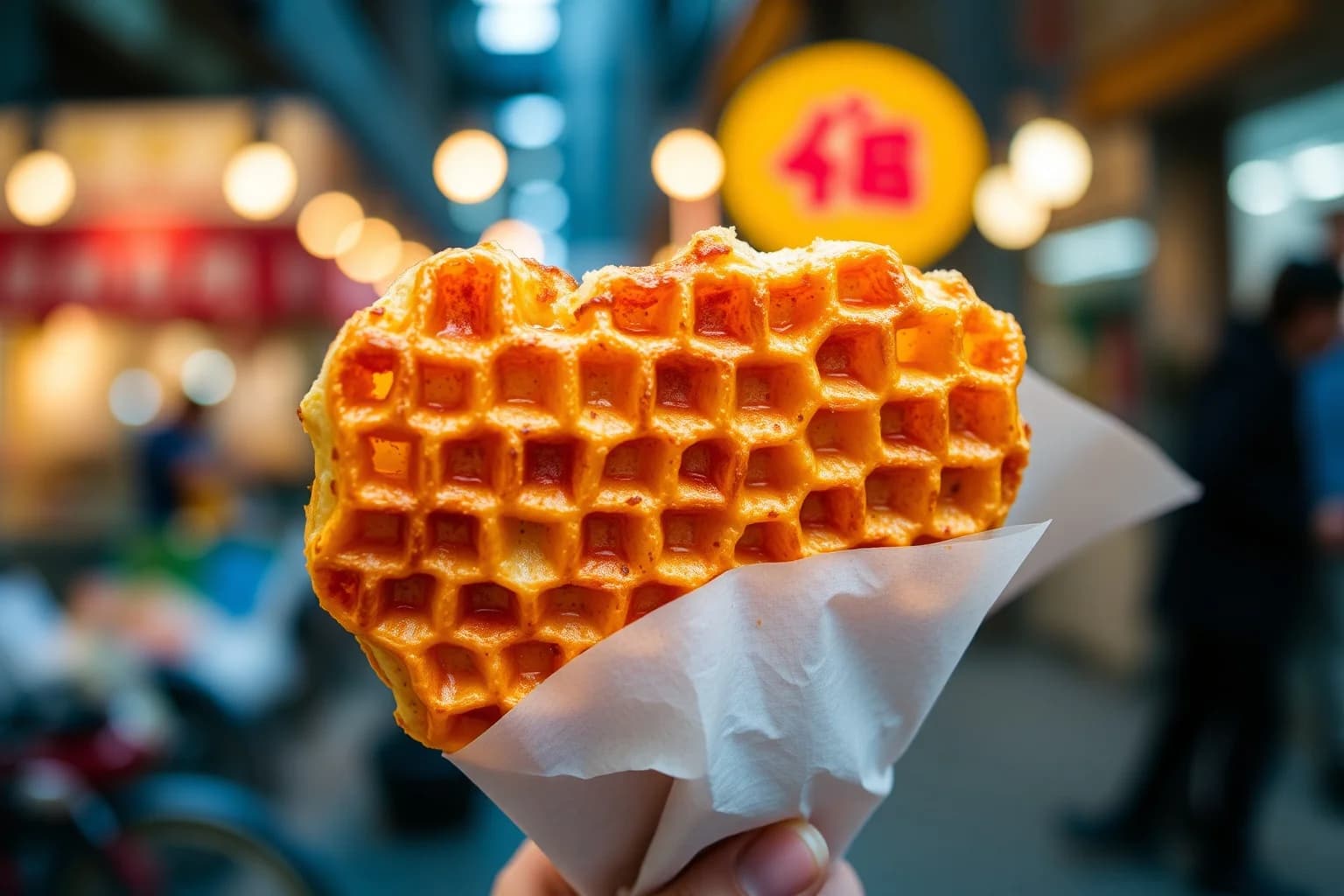
Egg Waffle
Hong Kong's egg waffle — gai daan jai — is a golden grid of crispy, eggy bubbles connected by a thin, lacy lattice. Each little sphere has a crackly exterior that gives way to a soft, custardy centre, creating a maddening contrast of textures that makes it impossible to stop popping them off one by one.
Can't decide? Let Chewsy pick for you
Take the quiz