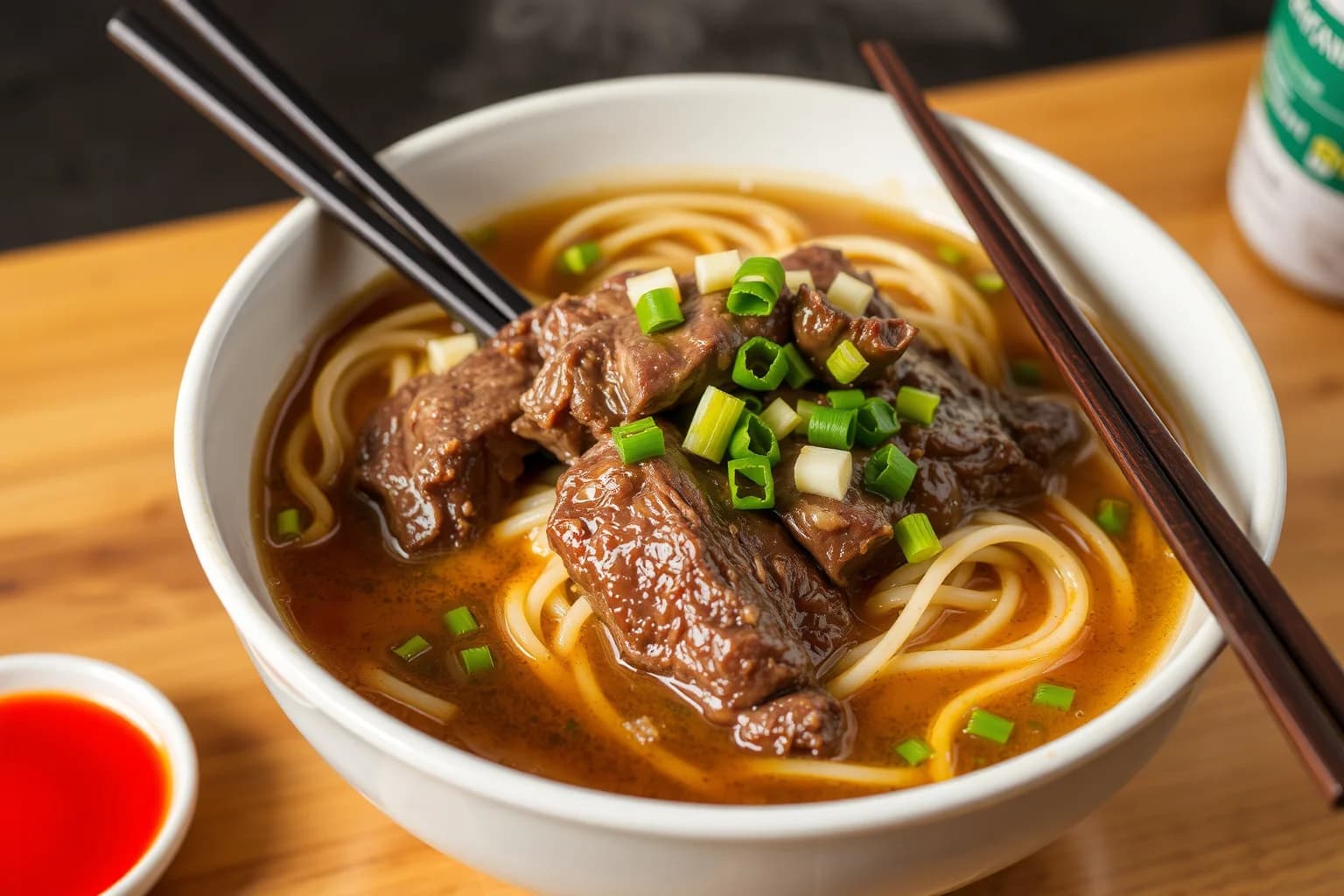
Beef Brisket Noodles
A steaming bowl of Hong Kong beef brisket noodles is liquid comfort. Chunks of brisket, braised for hours in a fragrant broth of star anise, cinnamon, and soy, fall apart at the mere suggestion of chopsticks. The meat is meltingly tender, its connective tissues transformed into pure gelatin richness.
The broth is the soul of the dish — clear yet deeply flavoured, with a gentle warmth from white pepper and a savoury depth that only comes from slow-simmered bones and spices. It coats the springy egg noodles that sit beneath the brisket, each strand soaking up the liquid gold.
Topped with a scatter of chopped scallions and a drizzle of chilli oil if you dare, this is the bowl Hong Kong turns to when the typhoon signals go up, when the workday has been long, or simply when nothing else will do.
Flavor Profile
Origin
Hong Kong, Hong Kong
Beef brisket noodles became a Hong Kong staple through the city's dai pai dong (open-air food stall) culture, where cooks would braise tougher, cheaper cuts of beef low and slow until they became extraordinary. The dish reflects Hong Kong's talent for transforming humble ingredients into something transcendent, and every neighbourhood has its champion brisket shop with queues down the block.
Variations
Curry Beef Brisket Noodles
The brisket braised in a fragrant, mildly spiced curry sauce — a popular cha chaan teng variation.
Clear Broth Version
A lighter take with a pristine, consommé-like broth that lets the pure beef flavour shine.
You might also like
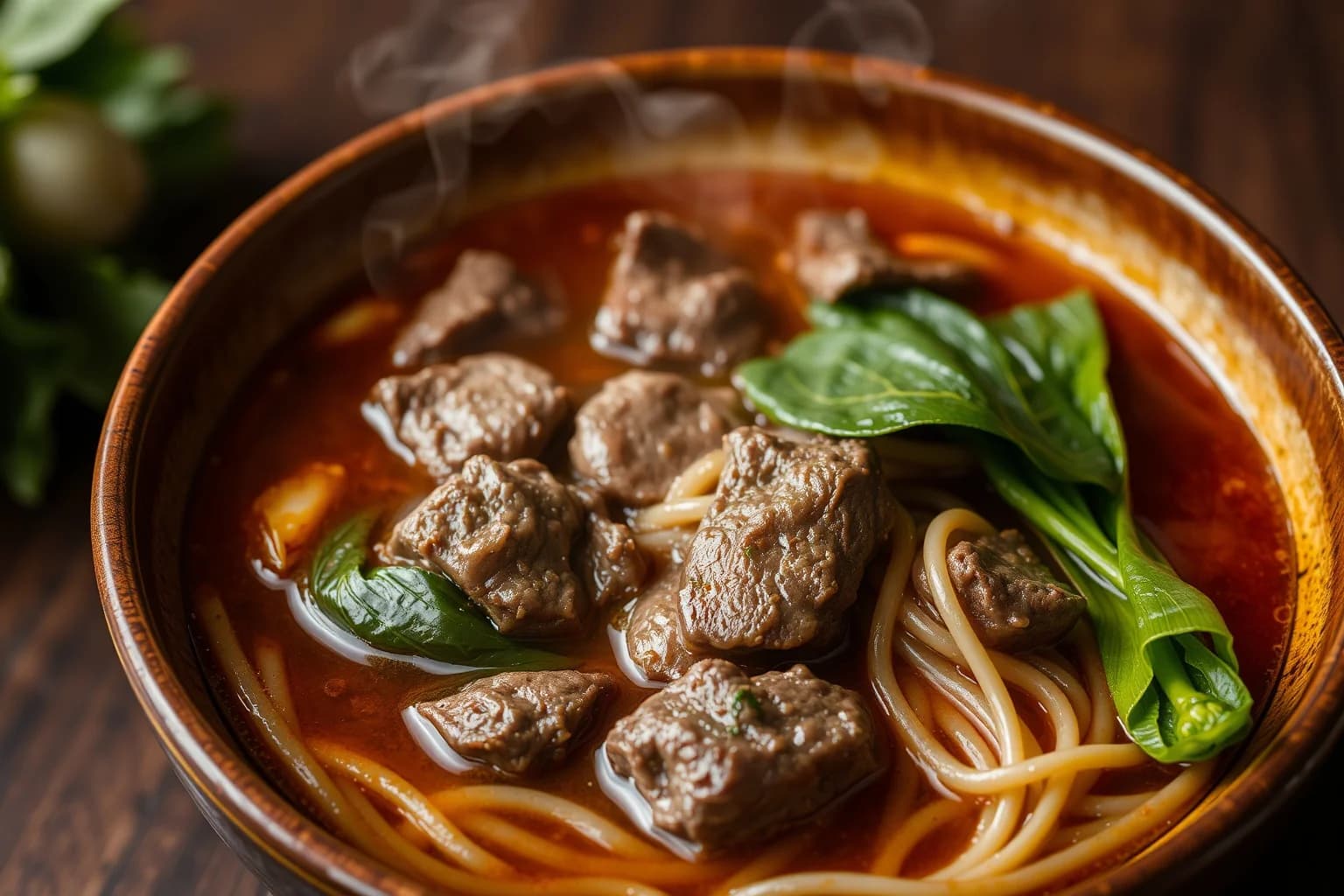
Taiwanese Beef Noodle Soup
Taiwan's national dish is a deep, dark, magnificent bowl of braised beef, chewy wheat noodles, and a broth so complex it borders on symphonic. The beef — usually shank or tendon — is simmered for hours with doubanjiang (chilli bean paste), soy sauce, tomatoes, and a bouquet of warming spices until the meat yields to a gentle tug of chopsticks.
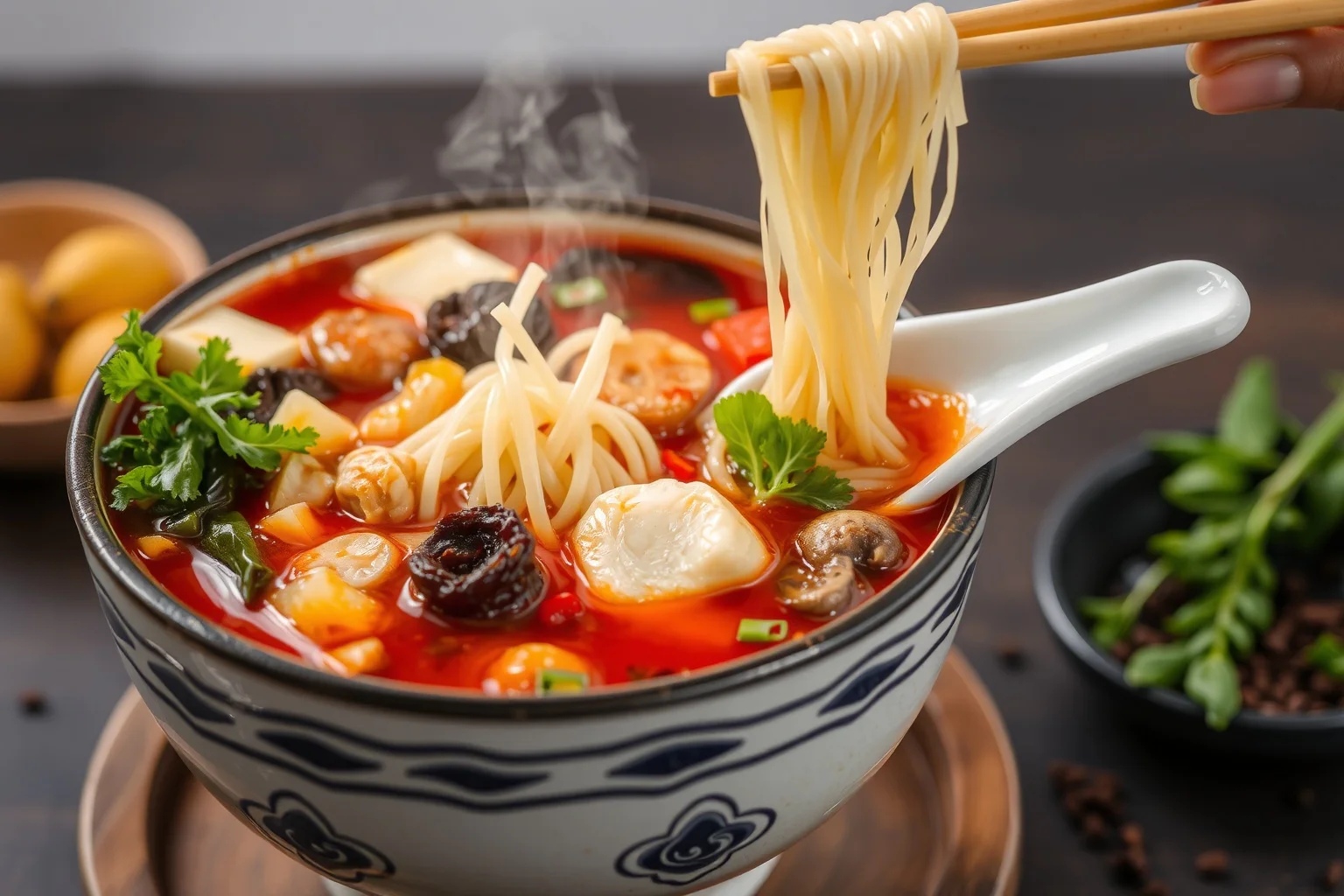
Malatang
Malatang is controlled chaos in a bowl — a bubbling, fiery broth loaded with whatever ingredients you desire, from thinly sliced meats and bouncy fishballs to leafy greens, mushrooms, and slippery glass noodles. The 'ma la' in the name says it all: 'ma' for the tingling numbness of Sichuan peppercorn, 'la' for the searing heat of dried chillies.
Can't decide? Let Chewsy pick for you
Take the quiz