Dai Pai Dong
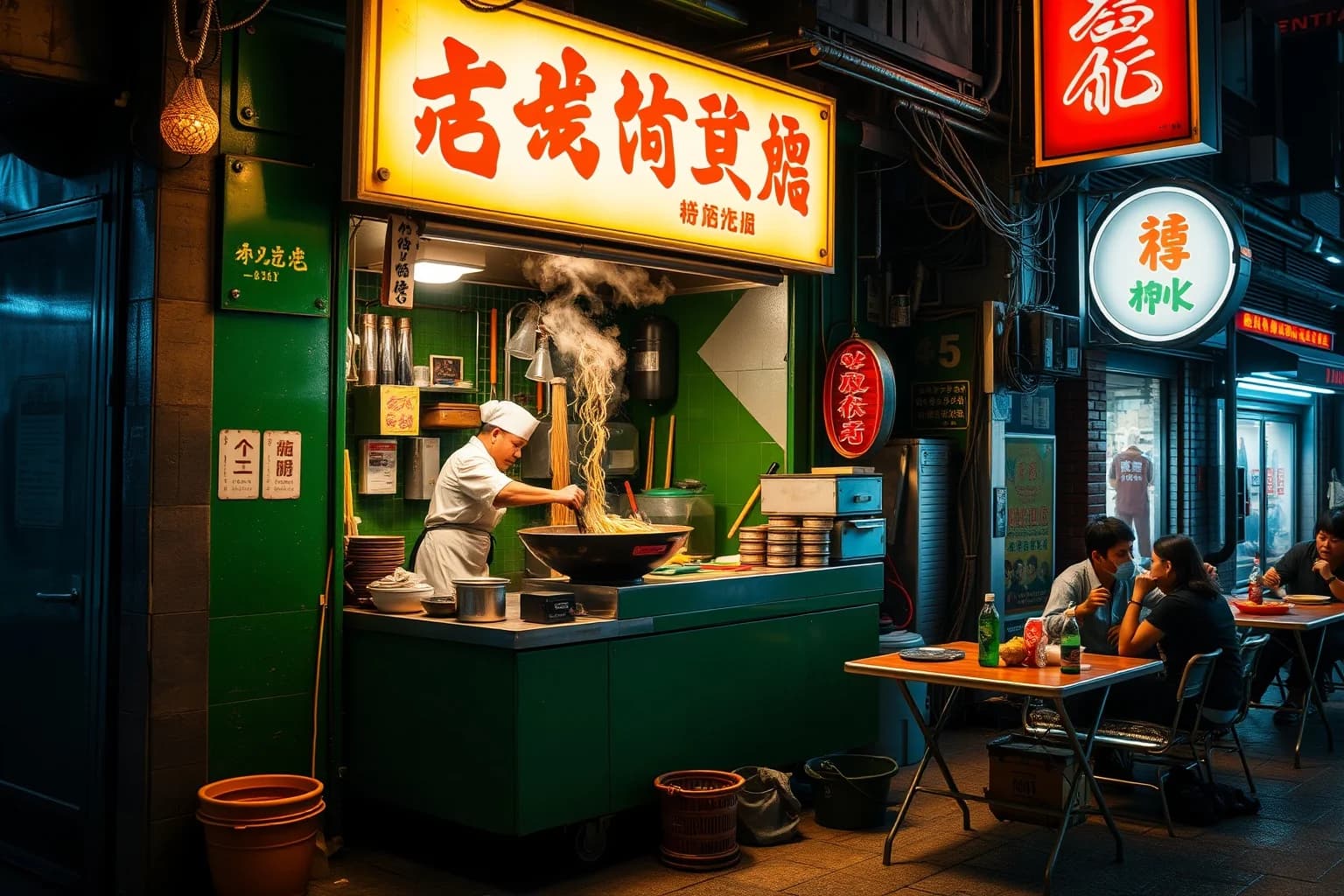
The soul of Hong Kong street cooking. Dai pai dong (大牌檔) are open-air food stalls with scorching woks, green-painted steel kitchens, and fold-out tables on the pavement. Fewer than 30 remain in the city, making every meal here a taste of living history.
Cultural Context
After World War II ended in 1945, the British Hong Kong government issued ad hoc licences to families of deceased and injured civil servants, allowing them to operate public food stalls. These licences were physically much larger than normal ones, earning the stalls the name 'dai pai' (大牌, 'big licence'). During the 1950s-1970s heyday, over 3,000 dai pai dong lined Hong Kong's streets. The government stopped issuing new licences in 1956 and stopped renewing them altogether, making these stalls an endangered species.
Today fewer than 30 survive — on Gough Street, Stanley Street, and scattered through Sham Shui Po and Mong Kok — each one a portal to old Hong Kong. The clatter of metal woks, the roar of open flames, and the aroma of wok hei drifting across the pavement make dai pai dong the city's most visceral dining experience. Parents bring children to pass on memories, elderly locals revisit their youth, and tourists seek out what guidebooks can't replicate: the unfiltered, fire-breathing heart of Hong Kong cooking.
Top Dishes
Can't decide? Let Chewsy pick for you
Take the quiz